Self-Service B2B Portal — Why Your Clients Will Stop Calling
The Phone Keeps Ringing
Every wholesale distributor knows this pattern: the phone starts at 7 AM and does not stop until 5 PM. Half the calls are the same thing — "Do you have product X in stock?", "What is my price on Y?", "Can you resend invoice number Z?"
These are not complex conversations. They do not require expertise or relationship-building. They are information lookups that happen to require a phone call because your clients have no other way to get the answers.
A self-service B2B portal does not replace your sales team. It removes the friction from routine tasks so your team can focus on work that actually requires a human — negotiating deals, solving problems, building relationships.
What Self-Service Actually Means in B2B
Self-service in B2B is not the same as consumer e-commerce. Your clients are not browsing for inspiration. They know exactly what they need. They want to:
- Place orders outside business hours. A restaurant owner ordering supplies at 10 PM after closing is not unusual — it is the norm.
- Check stock availability without waiting on hold.
- See their specific pricing. B2B pricing is individual — each client has negotiated rates.
- Reorder previous orders with one click instead of reading a list over the phone.
- Download invoices and credit notes without emailing your accounting department.
- Track deliveries without calling to ask "where is my order?"
According to Forrester, 73% of B2B buyers prefer self-service for routine purchasing. That number has been climbing steadily since 2020. The expectation is set by consumer experiences — if you can track a personal Amazon package in real time, why can you not see when your wholesale delivery is arriving?
Core Features of a Self-Service B2B Portal
A functional self-service portal for wholesale needs these components:
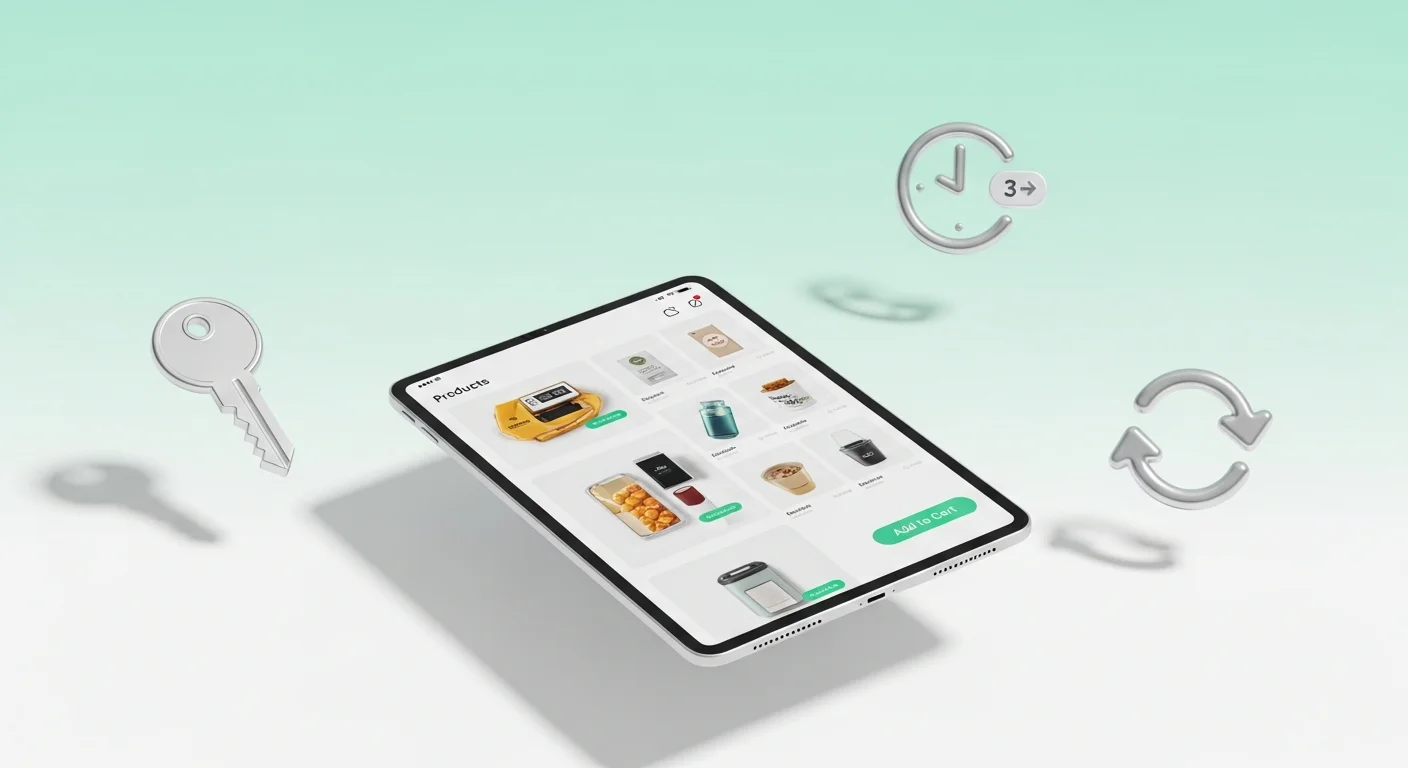
Product Catalog with Search and Filters
Your clients need to find products fast. That means search by name, SKU, category, and brand. Filters for product type, pack size, availability status. Product images where available. Clear descriptions with specifications.
For a distributor with 3,000–10,000 SKUs, good search is the difference between a portal clients use and one they abandon after the first attempt.
Individual Price Lists
Every B2B relationship has negotiated pricing. The portal must show each client their specific prices — not list prices. This means the system pulls pricing from your ERP or pricing database and displays it per logged-in client.
Some wholesalers have simple tiered pricing (3 tiers). Others have fully individual pricing per client per product. Both models work — the portal just needs to reflect your actual pricing structure.
Real-Time Stock Availability
Nothing kills trust faster than placing an order and getting a call back saying half the items are out of stock. The portal should show current availability, synced with your warehouse system. If an item is low stock, show it. If it is out of stock, show an expected restock date if you have one.
Order History and Repeat Orders
B2B ordering is repetitive. A bar orders roughly the same products every week. The portal should show full order history and let clients reorder a previous order with one click, then adjust quantities as needed. This single feature often accounts for 40–50% of all portal orders.
Invoice and Document Downloads
Your clients need invoices for their accounting. Instead of emailing your accounts team, they should be able to download any invoice, credit note, or delivery confirmation directly from the portal. This alone can eliminate 10–15 calls per day for a mid-sized distributor.
Delivery Tracking
Once an order is dispatched, clients want to know when it arrives. Basic tracking — order confirmed, packed, dispatched, delivered — reduces "where is my order" calls significantly.
The Time Savings Are Real
Here is what the numbers look like for a distributor processing 500 orders per month:
| Task | Time without portal | Time with portal | Savings |
|---|---|---|---|
| Taking phone/email orders | 40 hours/month | 12 hours/month | 28 hours |
| Stock availability inquiries | 15 hours/month | 1 hour/month | 14 hours |
| Invoice/document requests | 10 hours/month | 0.5 hours/month | 9.5 hours |
| Order status questions | 8 hours/month | 1 hour/month | 7 hours |
| Total | 73 hours/month | 14.5 hours/month | 58.5 hours |
That is roughly 1.5 full-time employees worth of work redirected from routine tasks to higher-value activities. Or, for a smaller operation, it is the difference between needing 3 people in the office and needing 2.
It Is Not About Replacing Relationships
The most common objection I hear from wholesalers: "Our clients want the personal touch. They want to call and talk to their account manager."
This misunderstands what is happening. Your best clients call because they have no alternative, not because they enjoy it. The personal relationship matters for negotiations, problem-solving, and trust. It does not matter for "I need 20 cases of product X delivered Thursday."
When you give clients a self-service option, what happens is this: routine orders move to the portal. The phone calls that remain are the ones that actually benefit from human conversation — complex orders, complaints, negotiations, new product discussions. Your sales team ends up having better conversations, not fewer relationships.
If your wholesale business focuses on specific verticals like alcohol distribution, the portal becomes even more valuable — see how this applies to wholesale liquor operations and our dedicated B2B wholesale portal.
Let’s talk about your project
Free 30-minute consultation. We’ll figure out if and how I can help.